 woodspick.
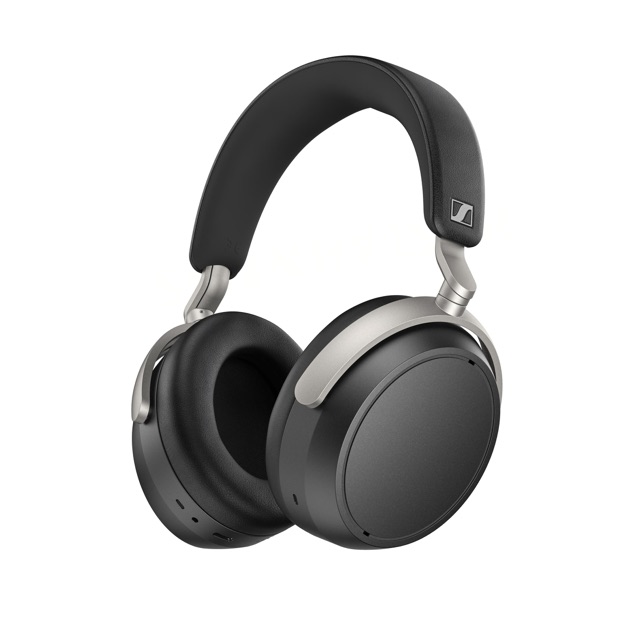
Choose the sound and the source connection
Consider the HDB 630 when music, sound shaping and connection flexibility matter more than the smallest packed size. Its included BTD 700 is a transmitter for a compatible USB source, and USB-C or analog cables offer other routes. Independent reviews support the sound-focused appeal, while also identifying isolation and fit compromises. The headphones must remain powered on even for analog input.
Reasons to consider it. Things to check.
What stands out
- Sound and connection flexibility receive positive independent reviews
- Included BTD 700 USB-C Bluetooth transmitter
- USB-C audio and analog input alongside Bluetooth
- Parametric EQ and crossfeed in Smart Control Plus
Limitations
- Analog use still requires power; no passive empty-battery fallback
- Standard-resolution and high-resolution wireless battery ratings differ
- A relatively large non-folding travel package
- Not waterproof or intended as sports headphones
The specifications that matter
| Exact model / SKU | HDB 630 / 700445 |
|---|---|
| Design | Closed-back, over-ear |
| Connectivity | Bluetooth 5.2; USB-C audio; analog input |
| Bluetooth codecs | SBC, AAC, aptX, aptX HD, aptX Adaptive |
| Included transmitter | BTD 700 USB-C Bluetooth transmitter; compatible audio host required |
| Runtime, standard resolution | Up to 60 hours per official FAQ |
| Runtime, BTD 700 aptX Adaptive 24/96 | Up to 45 hours per official FAQ |
| Power requirement | Headphones must be switched on for all inputs, including analog |
| Weight | 311 g without cable |
| App | Smart Control Plus; parametric EQ and crossfeed |
| Protection | Not IP rated / not waterproof |
Start with the listening you want to improve
The HDB 630 is a stronger candidate for someone who wants one closed-back headphone for music at a desk and listening away from home than for someone shopping only for the smallest travel kit. Its appeal combines sound shaping with several ways to connect, including the supplied BTD 700. Those options are valuable when they solve a real source-device problem.
Independent reviews support that direction, with limits. SoundGuys praises the sound, connection choices and parametric EQ, while describing ANC as a weaker point. RTINGS finds a balanced presentation but flags low-bass isolation and sound consistency when the fit changes. The useful conclusion is a music-focused option with compromises, rather than a universal replacement for every premium travel headphone.
What the BTD 700 actually does
The included BTD 700 is a USB-C Bluetooth transmitter. It connects to a compatible audio source and sends audio wirelessly to the headphones. It is not an analog receiver that makes a wired speaker wireless, and an arbitrary USB socket does not establish that the host can send audio.
The benefit is straightforward: it gives a supported source an aptX Adaptive route without depending on that device's built-in Bluetooth codec selection. That can be useful when moving between a computer, tablet and compatible phone. It also introduces a small accessory to carry, store and leave space for beside neighboring ports.
Check the complete chain before choosing the bundle for one device. The host must support the USB audio connection, the transmitter must be selected as the output, and the headphones must be paired to it. Sennheiser's iPhone setup notes explain that an existing direct Bluetooth connection may take priority during setup. A dongle is helpful, but not an automatic guarantee of identical behavior on every phone or app.
Wired listening gives you another practical choice
The HDB 630 accepts USB-C audio and an analog connection. USB-C can simplify a desk setup when the computer is nearby; the included 3.5 mm cable is useful for an appropriate analog source. Decide which cable would actually reach the position where you listen, and whether its connection leaves the device usable.
An important limitation is that the headphones must be switched on even for analog input. The analog cable is therefore not a passive, empty-battery fallback. If you routinely forget to charge travel headphones, that detail deserves more attention than the presence of a headphone socket alone.
Higher-resolution playback also depends on the source content and output settings. Sennheiser supports up to 24-bit/96 kHz on suitable paths, but a displayed sample rate is not a promise of an audible change with every recording. Check the app's Signal Path information and the source settings before attributing a difference to a codec name.
Make the equalizer useful rather than complicated
Smart Control Plus provides a parametric equalizer and crossfeed. Parametric EQ allows more targeted adjustment than a small set of broad presets. Crossfeed changes the treatment of left/right information; it is another listening choice, not something that needs to stay enabled for every recording.
Start from a setting you understand, use familiar material, and change one control at a time. Save a configuration that suits your listening rather than making a large collection of changes you cannot explain later. The original Smart Control app is not the app specified for this model.
If your preference is simply to connect and forget the controls, much of the HDB 630's flexibility may go unused. That is a valid reason to compare a simpler alternative, even if the extra controls appeal to another buyer.
Consider the travel compromises
The published weight is 311 g without the cable. RTINGS also points out that the headphones do not fold into a smaller shape and that the case takes up space. Check the packed dimensions alongside the rest of your bag instead of judging portability from a product photograph.
Fit affects more than comfort. RTINGS notes a thinner area of headband padding and differences in sound when the seal changes. Glasses, hair and ear-cup position can all make an individual fitting session worthwhile. These are not waterproof or sports headphones, so they are a poor choice if exercise or wet-weather exposure is the main job.
Budget the runtime for the connection you choose
Sennheiser's FAQ rates standard-resolution use at up to 60 hours, falling to up to 45 hours for aptX Adaptive 24-bit/96 kHz through BTD 700. The longer headline is not the rating for every enabled mode. For travel, allow a margin rather than counting on the maximum.
Choose the HDB 630 if its sound controls and connection options address the way you listen. If your priority is the strongest reduction of aircraft rumble or the most compact luggage, compare the Sony WH-1000XM6 and Bose Ultra second-generation headphones before paying for features you will not use. View the HDB 630 bundle on Amazon, confirming that BTD 700 and the listed accessories are included.
Who this is for
A listener who wants closed-back headphones for music across a desk and compatible portable sources, and will use the sound controls or included transmitter.
Consider something else if…
Your first priority is the smallest travel package, a passive analog fallback, or the strongest possible reduction of low aircraft rumble.
Sources
Model details checked November 1, 2026. Manufacturer ratings retain their stated conditions. Independent findings are credited to the linked publishers; their test methods and conditions can differ.