 woodspick.
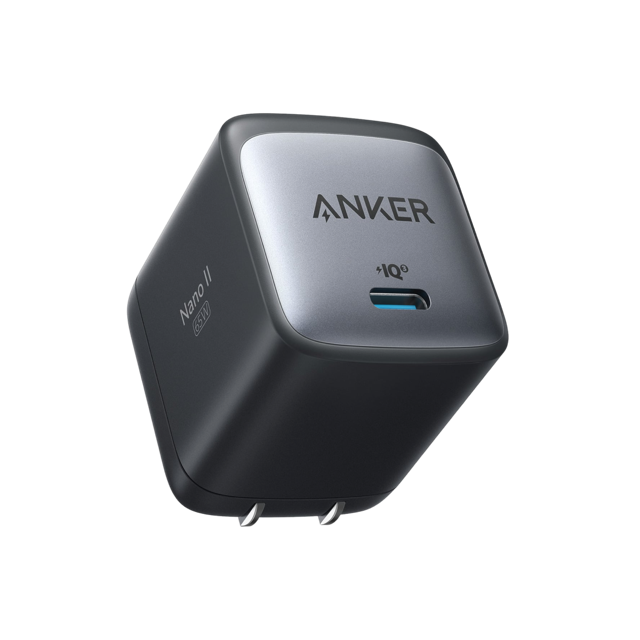
For one-device setups
The Anker 715 makes the clearest case for someone who needs one USB-C connection. Its documented 65W maximum and folding US plug suit a simple charging setup, provided the connected device and cable are compatible. There is no output split to work around because there is only one port. The tradeoff is equally clear: you cannot plug in a second device, and a cable is not included. This assessment is based on Anker's specifications, not hands-on testing.
Reasons to consider it. Things to check.
Pros, on paper
- Up to 65W from its single USB-C port.
- Folding US plug for packing away.
- Published dimensions and weight help you plan your kit.
Limitations
- Only one device can connect at a time.
- USB-C cable is not included.
- No USB-A port for existing USB-A cables.
The specifications that matter
| Exact model / SKU | A2663 / A2663114 |
|---|---|
| USB ports | 1 USB-C |
| Maximum single USB-C output | 65W |
| Multi-device output | Single port; no power sharing |
| Cable in the box | Not included |
| Dimensions, manufacturer listing | 1.65 × 1.42 × 1.74 in |
| Weight, manufacturer listing | 3.96 oz |
| US plug | Foldable |
Output figures are manufacturer ratings, not measured results. Unknown details are shown as not verified.
Who this is for
Consider the 715 if your usual routine is charging one compatible laptop, tablet or phone and you already own the right cable. Its single-port design keeps the purchasing decision focused: does that device support the available output, and is 65W sufficient for your needs? Anker lists a weight of 3.96 oz and dimensions of 1.65 by 1.42 by 1.74 inches. Those figures give you something concrete to check against the space in your bag, without relying on a claim that it feels small.
Consider something else if…
Skip it if your laptop needs more than the documented 65W maximum, or if charging a phone and laptop together is part of your routine. It also offers no direct connection for a USB-A cable. If you need a charger and USB-C cable in one purchase, compare the total kit rather than treating the 715 as ready to use on its own.
One port makes the tradeoff easy to see
The 715 has one USB-C port and no USB-A port. Anker lists output profiles of 5V/3A, 9V/3A, 15V/3A and 20V/3.25A, with a 65W maximum. There is no multi-device power allocation to interpret. That makes it a reasonable candidate for a dedicated charging spot or a one-device travel kit. It does not establish how quickly your particular device will charge: Anker's documented output is a capability, and actual charging depends on the device, cable and protocol.
Check the cable before you order
Anker explicitly states that a cable is not included with this product. If you already have a compatible cable, that may be a minor detail. If you are replacing an entire charging setup, it is another item to account for. The folding US plug is documented, as are the dimensions and 3.96 oz weight. We have not independently checked its fit beside neighboring plugs, sustained output, temperature or charging time, so none of those qualities forms part of this recommendation.
Is it worth considering?
Choose the Anker 715 for a compatible one-device setup where 65W is sufficient and you already have a suitable cable. Choose something else if you need simultaneous connections. Its appeal here comes from a clear, documented configuration; we have not established a charging-speed or reliability advantage over other products.
Compare it with the other chargers to see what changes when you add ports or an included cable.
Sources & review scope
Specifications and the US variant were checked on October 30, 2026. Product imagery is provided by the manufacturer and is not a photograph from our own testing.
- Anker 715 Charger (Nano II 65W): official product page and specifications
- Our research and disclosure standards
We have not verified real-world charging times, temperature, sustained performance or long-term reliability. Confirm current pricing, plug type and package contents with the seller.